Business Areas
Tailored solutions
for the future of renewable energy.
RPS · Long-Term Fixed-Price Contracts
What Is a Solar Power Project under the Renewable Portfolio Standard?
Turning Sunlight into Revenue!
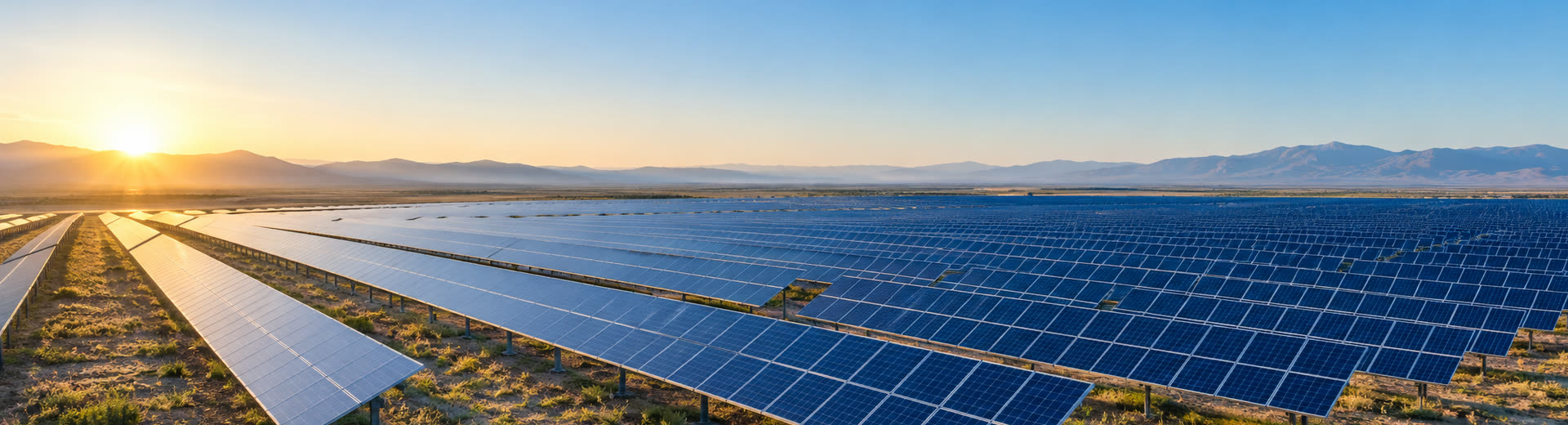
A solar power project is a commercial venture that uses land, buildings or other sites to obtain permits for and build a solar power plant, then generates revenue by selling the electricity to KEPCO (Korea Electric Power Corporation) or the Korea Power Exchange (KPX).


High Returns
15%+ annual returns
over the long term
Stability
Direct contracts with government
agencies secure your investment
Longevity
Revenue for 25+ years,
ideal for retirement planning
Hands-Off Income
Reduced variable capital needs
during project development
Long-Term Fixed-Price Contracts
Starting in 2027, Korea's market built around the Renewable Portfolio Standard (RPS) and Renewable Energy Certificates (RECs)
will be phased out and fully replaced by a government-led competitive bidding market for long-term fixed-price contracts.
Key Changes
- 01
Unified Government-Led Bidding
For new solar, wind and other renewable projects, the government sets bid volumes and price caps by energy source, and winners are selected through price competition among developers.
- 02
Long-Term Contracts with KEPCO
Selected developers sign long-term fixed-price power purchase agreements with KEPCO (typically in 20-year terms), reducing revenue volatility and securing stability.
- 03
Non-Price Evaluation
Evaluation looks beyond the bid price to factors such as contribution to domestic industry and supply chains, and to energy security.
- 04
Phase-Out of RPS and the REC Spot Market
The existing spot market will remain open for a three-year grace period after the law takes effect, through December 31, 2029. RECs under existing contracts will be issued for up to 20 years.
- 05
Support for Small-Scale Facilities
A separate, dedicated contract market for small-scale renewable energy producers is also planned.
During the three-year grace period ending December 31, 2029, existing participants may continue spot trading as before, but must move to the new long-term fixed-price contract system or the private market within that period.
… Fixed-price contracts can be signed only for the remaining term, calculated as (20-year total contract term) − (time already operated in the spot market).
Existing producers that obtained facility confirmation by the end of 2026 and participated in the spot market can, in principle, continue to receive RECs for up to 20 years, even after the spot market is abolished.